Your customers may not think much about the vehicles your business uses to serve them, but they are the invisible foundation of good customer experience. Without reliable vehicles, your people can’t be there when your customers need them. Period.
So, do you need a repair shop or a complete automotive service center that understands business fleets? Quick-service providers can handle routine tasks, but they are not designed to manage fleet reliability as a system. For fleets where downtime matters, long-term continuity with a full-service shop is what allows problems to be identified, prioritized, and prevented before they disrupt operations.
Finding a shop that can provide quality, reliability, and longevity can be a challenge, but it is worth the effort. As you evaluate potential shops, consider these factors:
- Is it a corporate store, a franchise, or an independent shop? Recognizable names offer the promise of trust, and in many ways, this is a valid signal. Just because a shop is independently owned does not mean it’s better, either. The key thing here is to understand that a corporate store’s quality is usually dependent on the location’s manager. At a franchise or independent shop, the owner is usually the one controlling quality…until they grow large enough that a manager takes their place in that role. Turnover of that controlling-quality role is typically lowest at independent shops and highest at corporate stores. Franchises can fall anywhere in between. Understanding the ownership structure can help you know what kind of consistency you might expect from the shop over time.
- Has the shop been operating for at least 5 years? 10 years? You’ve probably heard that 90% of businesses fail in the first year and that 90% of the survivors fail sometime in the next few years. Shops that have been operating longer than 10 years are able to do so, in part, because they have good systems and procedures in place. A new shop doesn’t mean they’re no good, but it does mean that you’re at risk of being the guinea pig while they figure things out.
- Does the shop have many good reviews? This is one of the best signs of a good shop, but make sure that you read the reviews rather than just look at the ratings. And read the bad reviews, too. Every business will get a bad review at some point. You want to see how they handle it when things go wrong.
- Is the shop affiliated with reputable, local suppliers? While not required for good service, this can be another sign of quality and consistency. Quality parts can be purchased online, but local relationships provide speed of service and a real person to help solve problems.
- What is the shop’s standard warranty? Although standard customer warranties often don’t apply to commercial vehicle use, this is still a good indicator of a shop’s quality. If the shop doesn’t offer at least a 2-year warranty, you should be cautious.
- Does the shop have an after-hours key drop? You may never need this, but it’s another sign of a shop’s ability to develop stable systems and provide good customer service.
- Does the shop have an online appointment tool? Again, you may never need this. It shows the maturity of the shop’s systems and organizational ability, which is a key factor in your satisfaction.
- Does the shop have experience with fleet service? Many talented technicians work for shops that focus on personal vehicles or single-vehicle businesses. These shops can provide quality repairs, but they may not be familiar with your needs as a fleet customer. Ask whether they use systems like Auto Integrate or Wheels. Even if you don’t use these systems yourself, this is a sign that they know what a fleet customer cares about.
Now that you’ve determined whether the shop is familiar with fleets and can provide consistent service, you need to decide if it’s the right shop for your business needs.
- How many vehicles are in your fleet?
- How often should you bring each vehicle to the shop?
- How long will your vehicle need to be out of service?
- Why do your vehicles seem to randomly break down at the worst times?
Read the article Reality Check: Small Business Fleet Difficulties for insights that can help you prevent breakdowns and improve uptime.
How to choose reliable fleet services in Princeton, MN, and avoid costly mistakes. Discover what to look for in a trusted fleet mechanic.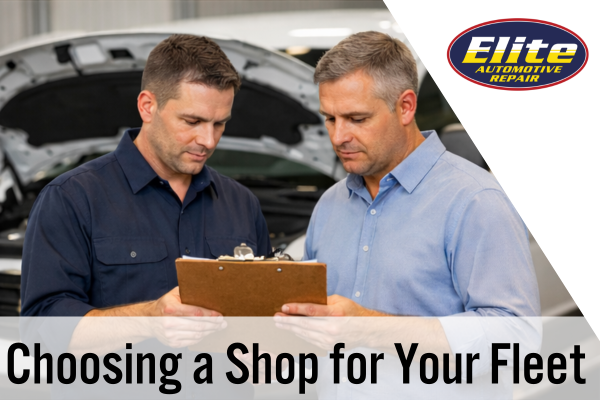
Your customers may not think much about the vehicles your business uses to serve them, but they are the invisible foundation of good customer experience. Without reliable vehicles, your people can’t be there when your customers need them. Period.
So, do you need a repair shop or a complete automotive service center that understands business fleets? Quick-service providers can handle routine tasks, but they are not designed to manage fleet reliability as a system. For fleets where downtime matters, long-term continuity with a full-service shop is what allows problems to be identified, prioritized, and prevented before they disrupt operations.
Finding a shop that can provide quality, reliability, and longevity can be a challenge, but it is worth the effort. As you evaluate potential shops, consider these factors:
- Is it a corporate store, a franchise, or an independent shop? Recognizable names offer the promise of trust, and in many ways, this is a valid signal. Just because a shop is independently owned does not mean it’s better, either. The key thing here is to understand that a corporate store’s quality is usually dependent on the location’s manager. At a franchise or independent shop, the owner is usually the one controlling quality…until they grow large enough that a manager takes their place in that role. Turnover of that controlling-quality role is typically lowest at independent shops and highest at corporate stores. Franchises can fall anywhere in between. Understanding the ownership structure can help you know what kind of consistency you might expect from the shop over time.
- Has the shop been operating for at least 5 years? 10 years? You’ve probably heard that 90% of businesses fail in the first year and that 90% of the survivors fail sometime in the next few years. Shops that have been operating longer than 10 years are able to do so, in part, because they have good systems and procedures in place. A new shop doesn’t mean they’re no good, but it does mean that you’re at risk of being the guinea pig while they figure things out.
- Does the shop have many good reviews? This is one of the best signs of a good shop, but make sure that you read the reviews rather than just look at the ratings. And read the bad reviews, too. Every business will get a bad review at some point. You want to see how they handle it when things go wrong.
- Is the shop affiliated with reputable, local suppliers? While not required for good service, this can be another sign of quality and consistency. Quality parts can be purchased online, but local relationships provide speed of service and a real person to help solve problems.
- What is the shop’s standard warranty? Although standard customer warranties often don’t apply to commercial vehicle use, this is still a good indicator of a shop’s quality. If the shop doesn’t offer at least a 2-year warranty, you should be cautious.
- Does the shop have an after-hours key drop? You may never need this, but it’s another sign of a shop’s ability to develop stable systems and provide good customer service.
- Does the shop have an online appointment tool? Again, you may never need this. It shows the maturity of the shop’s systems and organizational ability, which is a key factor in your satisfaction.
- Does the shop have experience with fleet service? Many talented technicians work for shops that focus on personal vehicles or single-vehicle businesses. These shops can provide quality repairs, but they may not be familiar with your needs as a fleet customer. Ask whether they use systems like Auto Integrate or Wheels. Even if you don’t use these systems yourself, this is a sign that they know what a fleet customer cares about.
Now that you’ve determined whether the shop is familiar with fleets and can provide consistent service, you need to decide if it’s the right shop for your business needs.
- How many vehicles are in your fleet?
- How often should you bring each vehicle to the shop?
- How long will your vehicle need to be out of service?
- Why do your vehicles seem to randomly break down at the worst times?
Read the article Reality Check: Small Business Fleet Difficulties for insights that can help you prevent breakdowns and improve uptime.